
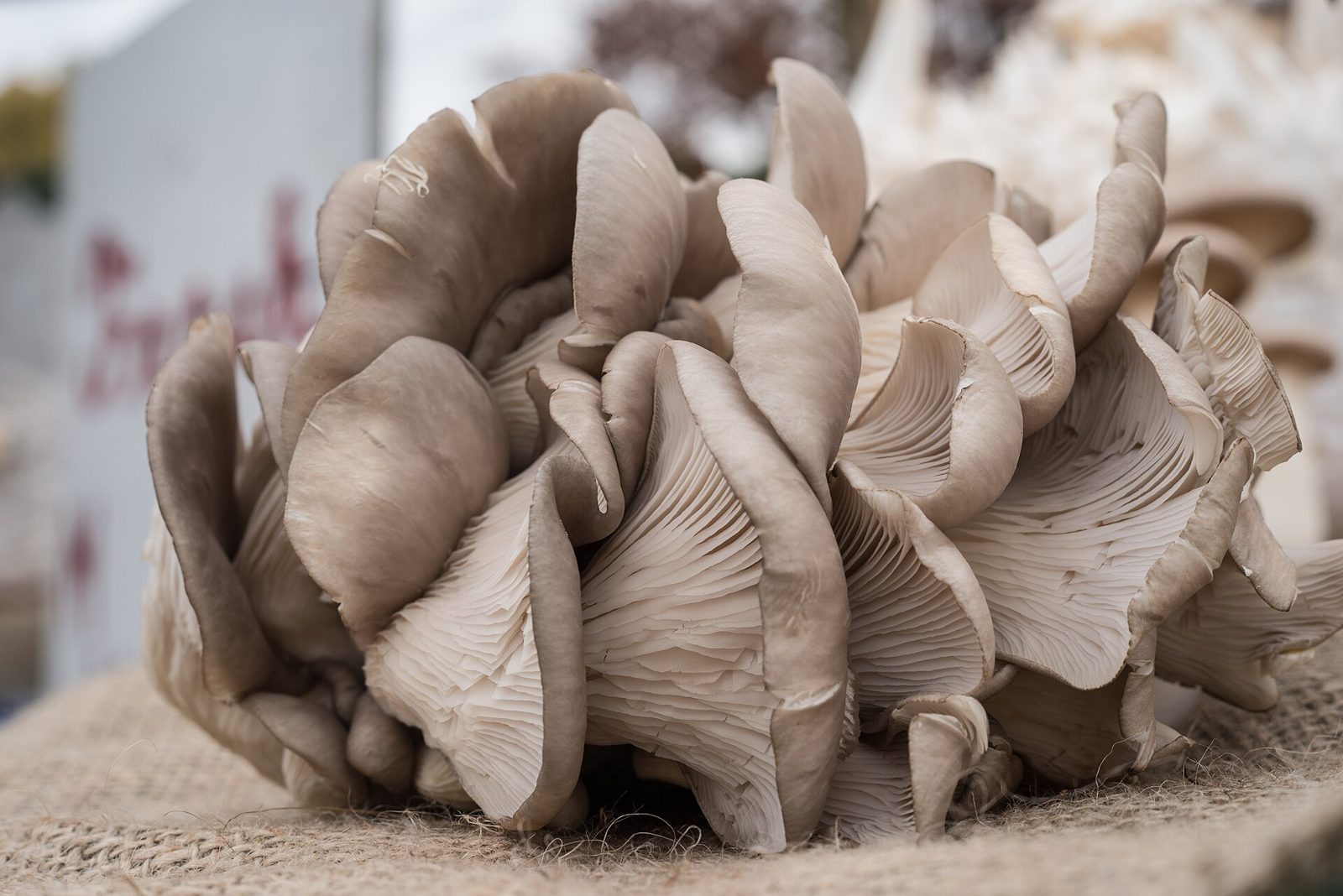
You can grow oyster mushrooms indoors, with no garden, and see the first ones in a few weeks. The simplest start is a ready-made, already colonized kit that you set up in a suitable spot, which is how the University of Florida (UF/IFAS) describes the shortcut. To build it yourself, UF’s home guide mixes grain spawn into pasteurized wheat straw at 5–10%, incubates it in the dark for two to three weeks, then fruits it with light, a cooler room and high humidity. A third home route, from the University of Wisconsin, packs wood chips and grain spawn into a 5-gallon bucket. Whichever you choose, most of your effort goes into keeping contamination out.
- Container friendly
- Yes
- Substrate
- Pasteurized wheat straw (UF)
- Spawn rate
- 5–10% of the straw
- Days to first harvest
- About 5 weeks on straw (Cornell)
- Fruiting temp
- About 68°F (20°C)
- Humidity
- 85–90% when fruiting
- Flushes
- First plus 2–4 more (UF)
Three ways to grow oyster mushrooms at home
From a kit
In a bucket or bags
On straw, step by step
Learn the basics first
Oyster mushroom growing conditions by stage
Oysters are grown in distinct phases that want different conditions: a dark, warm spawn run, then a cooler, brighter, humid fruiting stage. The table lists only what our extension sources state. A dash means they do not give it.
| Stage | Days | Temperature | Humidity | Light | Fresh air | Notes |
|---|---|---|---|---|---|---|
| Incubation (spawn run on straw) | 14–28 days | 75–77°F (24–25°C) | 80–90% | Dark | CO2 not important (Cornell) | UF: 2–3 weeks at 24–25°C, in a clean, dark place such as a cardboard box. Cornell (commercial): 14–28 days, ideally around 70°F and never above 80°F. |
| Home bucket, undisturbed (Wisconsin) | 14 days | 65–75°F (18–24°C) | Not stated | Away from sunlight | Not stated | Wood chips and grain spawn in a 5-gallon bucket at room temperature. |
| Fruiting (pinning) | Not stated | 68°F (20°C) | 90% (UF); 85% (Cornell) | Needed to trigger pins | Good air exchange to avoid CO2 build-up (UF) | UF: fruiting starts around 3 weeks after incubation begins, triggered by light and a lower temperature of about 20°C. |
| Harvest | 35 days | Not stated | Not stated | Not stated | Not stated | Cornell: a five-week crop cycle on straw, inoculation to harvest (commercial). Pick while the cap is still curled under. UF: 2–4 more flushes after the first. |
Three of these numbers conflict, so here is how to read them. UF gives the spawn run at 24–25°C (75–77°F), while Cornell says about 70°F and not above 80°F; both agree it is a warm, dark phase. For fruiting humidity, UF uses 90% and Cornell’s fruiting room held 85%, so aim for the high 80s. On timing, UF’s three weeks to the start of fruiting and Cornell’s five weeks to harvest can both be true: one marks when pins begin, the other when you pick. The UF guide is written for home growers; Cornell’s pages describe commercial production, so expect more variation at home.
How to grow oyster mushrooms on straw
- Get healthy grain spawn. UF lists healthy spawn, pasteurized substrate and containers as the three things you need. Spawn is grain that has been colonized with the fungus; millet is described as an excellent seed for oyster spawn. See our spawn guide for sourcing and making it.
- Cut and soak the straw. Cut wheat straw into pieces 4–5 in (10–13 cm) long and soak it overnight in water. Cornell adds that shredding straw before treatment can substantially raise yields.
- Pasteurize it. Hold the straw at 165°F (74°C) in a water bath for 1–2 hours. UF also lists steam or a hydrated-lime bath as alternatives, and our substrate guide covers the options.
- Mix in the spawn. Inoculate the pasteurized straw by mixing in spawn at 5–10% by volume or by weight, then fill bags.
- Incubate in the dark. Keep the filled bags in a clean, dark place at 24–25°C (75–77°F) and 80–90% humidity for two to three weeks while the white mycelium colonizes the straw. Check the bags for spots of color and protect them from insects and rodents.
- Trigger fruiting. When the bags are ready, give them light and a cooler room of about 20°C (68°F), with humidity around 90% and good air exchange so carbon dioxide does not build up.
- Harvest the clusters. Twist and gently pull each cluster, or cut it flush with the substrate using a knife. Our harvesting guide covers timing and the flushes that follow.
Oyster colors and strains
Oysters come in more than one color. UF says the fruiting bodies may be white, yellow, brown, gray, blue, tan or even pink, and that the color varies by species and light. Cornell names pink, blue, yellow and brown oysters as types that can be grown on straw, and its trials compared Golden and Blue strains. Our sources do not match strains to specific temperature ranges, so we do not claim that one color grows warmer or cooler than another. Follow the guidance that comes with your spawn or kit.
Common oyster mushroom problems
Harvesting oyster mushrooms
Harvest clusters while the caps are still curled under and before they drop spores. Twist and gently pull, or cut flush with the substrate. After the first flush, UF expects two to four more depending on the strain and the surroundings. For timing cues and what to do between flushes, see our oyster mushroom harvesting guide.
What our sources do not tell you
We found no sourced storage times for fresh oysters, no absolute yield figure per bag, and no difficulty rating. Cornell’s timings are commercial, and none of our sources give a time-to-harvest for a retail kit. Where those gaps matter, treat the numbers here as a starting point and let your spawn supplier’s instructions win.
Grow these next
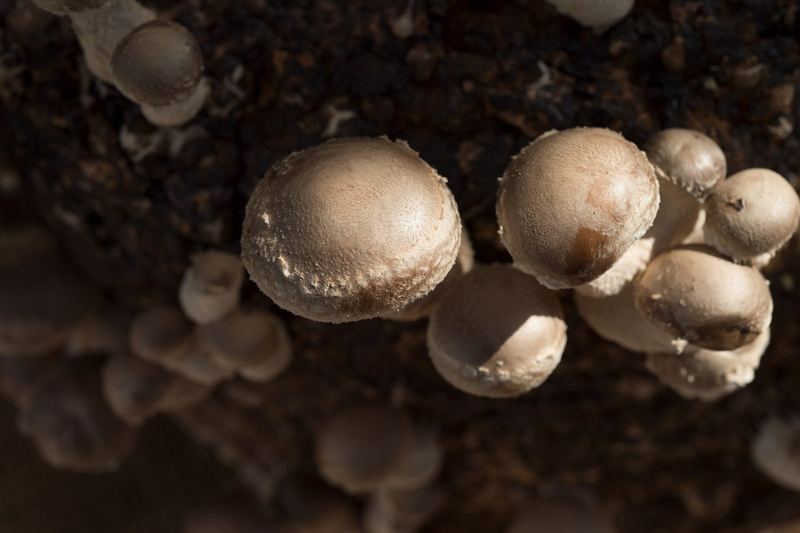
Once oysters are working, shiitake is the natural second species, but it grows on hardwood logs and runs on a much slower calendar. For the fundamentals behind both, read our mushroom grow kits guide.
Frequently asked questions
How long do oyster mushrooms take to grow?
On straw, Cornell describes a five-week crop cycle from inoculation to harvest, but that is commercial production. The University of Florida's home guide has the spawn run taking two to three weeks, with the fruiting stage starting around three weeks after you put the bags in the dark. A bought kit skips the spawn run because it arrives already colonized.
Do oyster mushrooms need light?
Yes, to fruit. The University of Florida says fruiting is triggered by light and a lower temperature, and Cornell adds that light color and intensity affect the shape, size and color of the mushrooms. During incubation, Cornell says light and CO2 are not important.
What can I grow oyster mushrooms on?
Wheat straw is the standard substrate in the University of Florida guide. Its other options are rice stalks, corn cobs, coffee grounds, cotton pulp, peanut shells, banana or plantain leaves and paper. Wisconsin's home bucket method uses wood chips.
How many harvests will I get?
The University of Florida says that after the first flush there should be two to four more, depending on the strain and the surroundings. Wisconsin's bucket guide says to keep misting and harvesting for about four weeks or until the bucket stops producing.
Why is my oyster mushroom bag turning green?
Rapid green growth is the sign of Trichoderma, a common contaminant according to the University of Florida. Blue, green, black or yellow spots all point to contamination, and heavily contaminated bags are best removed and thrown away.
Sources
- D.I.Y. FunGuide: Grow Your Own Oyster Mushrooms at Home (SL448/SS662), University of Florida IFAS Extension
- Seven Stages of Cultivation, Cornell Small Farms
- Four Methods of Commercial Cultivation, Cornell Small Farms
- The Science of DIY Mushroom Substrates, Cornell Small Farms
- Growing Mushrooms in Buckets, University of Wisconsin Extension, Forestry and Wildlife
 Shiitake