
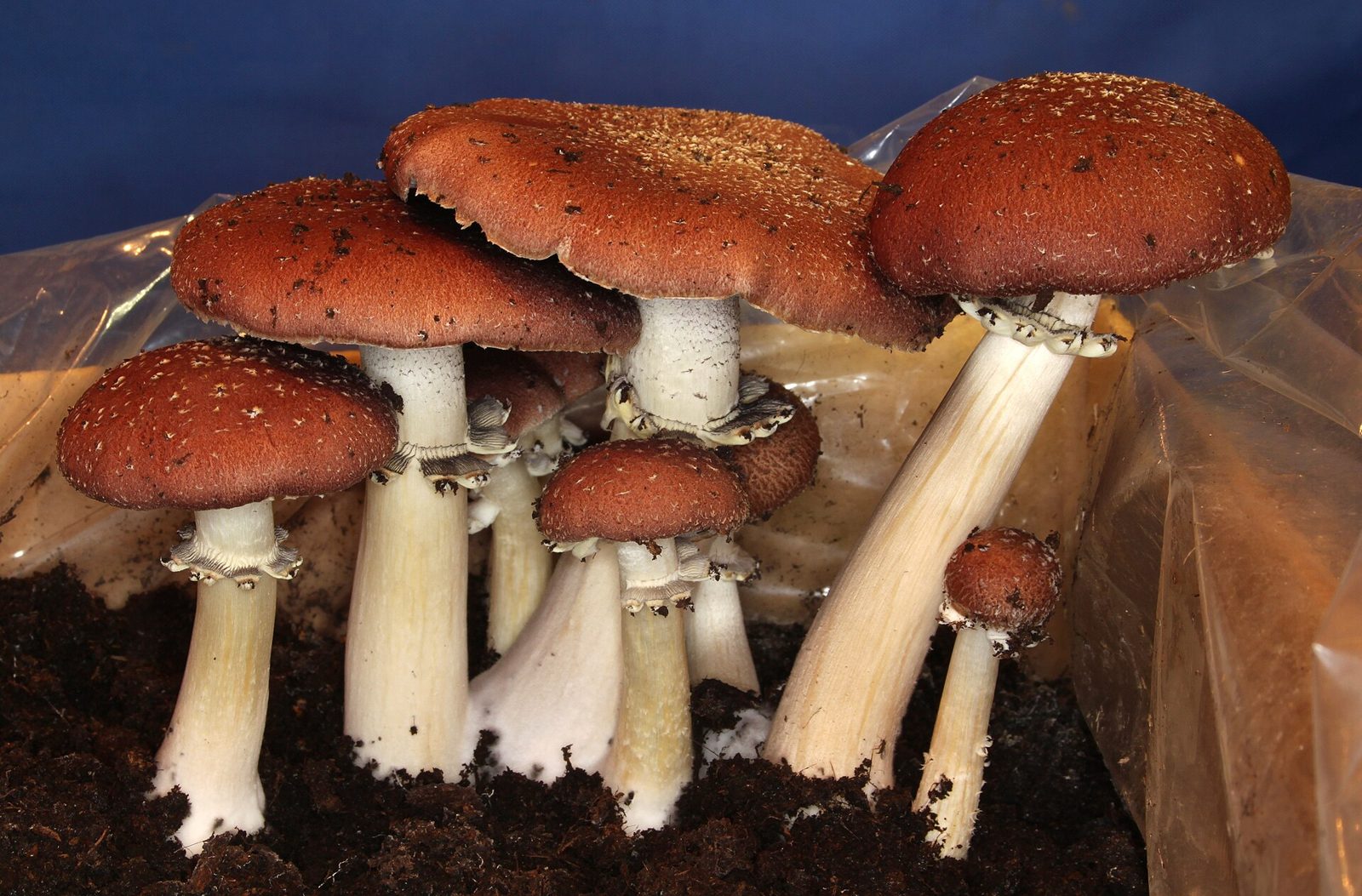
Wine cap is the gourmet mushroom you grow in the garden: spread purchased spawn over a bed of hardwood wood chips or straw, keep it damp and shaded, and wait 2 to 6 months for the first mushrooms. Cornell and NC State both say you can inoculate at any point in the growing season, and Cornell says an established patch can last several seasons. It is slower than a kit but needs no indoor space. Only eat mushrooms from beds you inoculated yourself.
- Sun
- Part shade
- Days to first harvest
- 2–6 months (Cornell, NC State)
- Substrate
- Hardwood chips or straw
- Where
- Shaded outdoor bed
- Inoculate
- Any time in the growing season
- Harvest sign
- Bell-shaped cap, white gills
- Spawn rate
- 600 g/m² in one Chinese trial
Where the numbers on this page come from
We use two kinds of source, and we mark which is which.
US extension guidance (Cornell, the University of Kentucky, NC State) covers the practical side: what to build the bed from, when to inoculate, how much shade, how long to wait and when to pick. We state those normally.
Research papers from China (a review of wine cap cultivation and a bed trial) supply the spawn rate and the temperatures. Those are research-trial figures, not recommendations from an extension service, so each one is labelled “in the review” or “in the trial”. Use them as context, not as targets.
Why a garden bed suits wine cap
Cornell says wine cap can grow in shaded woods and in a sunny garden, and calls integrating it into existing mulched areas of the farm or garden ideal, with vegetables, berries or fruit trees. Cornell’s urban-farming guide adds that a wine cap patch can go into mulched garden beds provided the soil is free of contaminants, which matters if your bed is in a city plot. Once established, a patch can last several seasons and can be used to start new patches.
For a log-based outdoor mushroom instead, see shiitake. For indoor growing, oyster and lion’s mane are the better fit.
Wine cap growing conditions
The table mixes extension guidance and the two Chinese papers, and its notes say which is which.
| Stage | Days | Temperature | Notes |
|---|---|---|---|
| Spawn run (review) | Not stated | Grows 41–95°F (5–35°C); optimum 79°F (26°C) | Growth slows below 10°C (50°F) and stops below 5°C (41°F) in the review, which also gives substrate moisture of 65–80% (75% ideal). Cornell lists woodchips at 2–12 months for colonization. Kentucky: keep the bed heavily watered for the first four days. |
| Fruiting trigger (review) | Not stated | 50–68°F (10–20°C) | Primordia form when temperature drops to 10–20°C. Around 16°C (61°F) gives stout, compact mushrooms that are less likely to open. Around 24°C (75°F) gives slender ones prone to early cap opening. |
| First harvest | 42–52 days | Not stated | 42 to 51.7 days in the Chinese bed trial. Cornell and NC State say 2 to 6 months after inoculation, and Kentucky says two months to a year. |
| Harvest | Not stated | Not stated | Kentucky: harvest while the cap is bell-shaped and the gills are still white. |
The timing numbers conflict, so read them this way. The trial’s 42 to 52 days comes from controlled beds in a research setting. Cornell and NC State’s 2 to 6 months is the US extension range, and Kentucky’s two months to a year is wider still. For a home bed, plan on months rather than weeks, and expect variation.
Wine cap seasons
The review says wine cap fruiting bodies typically appear in spring and autumn. It gives seasons, not months, so the calendar below is our rough mapping for a temperate northern climate. It does not mark an inoculation window, because Cornell and NC State say any time in the growing season works.
A review of wine cap cultivation says fruiting bodies typically appear in spring and autumn. It gives no months, and when that happens in your bed depends on your local temperatures.
How to grow wine caps in a garden bed
- Pick a shaded spot. Cornell says wine caps grow in shaded woods or in a sunny garden among large leafy plants that add shade. The University of Kentucky suggests a wooded site or mulch bed with a north- or east-facing slope.
- Gather hardwood wood chips or straw. Cornell says all you need is hardwood woodchips or straw. NC State says chips that are 6 months old are perfectly fine. Cornell says low-nitrogen, high-carbon materials like these can be inoculated outside in the open air.
- Lay the bed and water it. Kentucky describes adding a 2-inch (5 cm) layer of wood chips, watering it, and then inoculating by broadcasting spawn. In the Chinese bed trial, dry substrate went on at 7.5 kg/m² and spawn at 600 g/m² (roughly 2 oz per square foot). That is one trial’s rate, and extension sources give none.
- Water heavily for the first four days. Kentucky says to keep the bed heavily watered for the first four days after inoculation. After that, keep it damp. The review gives 65–80% substrate moisture, with 75% ideal, but we give no way to measure that at home.
- Wait for it to fruit. Cornell and NC State say 2 to 6 months after inoculation while temperatures stay warm enough. Kentucky says fruiting is highly variable, from two months to a year.
- Harvest while the cap is bell-shaped. Pick while the gills are still white. See our wine cap harvesting guide.
Wine cap care
Water
Shade
Temperature
Garden soil
Common wine cap problems
We found no sourced list of wine cap pests or competing fungi, so we do not give one. Our contamination guide covers the general picture.
Harvesting wine caps
The University of Kentucky says wine caps are harvested when the cap is bell-shaped and while the gills are still white. Once the cap has flattened and the gills have darkened from spore formation, flavor and value decline. We cover the timing in our wine cap harvesting guide. As always, only eat mushrooms from beds you inoculated yourself.
What our sources do not tell you
We found no storage method for wine cap, no yield per square foot from US sources and no extension spawn rate. The 600 g/m² rate is from one Chinese trial. The fruiting time conflicts across sources: 42 to 51.7 days in the trial, 2 to 6 months from Cornell and NC State, and two months to a year from Kentucky. We show all three.
Grow these next
Wine cap is a good outdoor companion to indoor species. Lion’s mane fruits indoors from sawdust, oyster is the quick indoor starter, and shiitake uses logs. For the substrate basics see our mushroom substrate guide, and for the full picture, our how to grow mushrooms guide.
Frequently asked questions
What do wine cap mushrooms grow on?
A bed of hardwood wood chips or straw. Cornell says all you need is a space with hardwood woodchips or straw, and the University of Kentucky describes a bed of wood chips or sawdust. NC State says chips about six months old are perfectly fine.
When do I plant wine cap spawn?
Any time during the growing season. Cornell and NC State both say wine caps can be inoculated at any point in the growing season, and Cornell says low-nitrogen, high-carbon materials like woodchips and straw can be inoculated outdoors in the open air.
How long do wine caps take to fruit?
Cornell and NC State say 2 to 6 months after inoculation. The University of Kentucky says fruiting is highly variable, from two months to a year. A Chinese bed trial reported first harvests at 42 to 51.7 days, but that is a field trial, not US extension advice.
Do wine caps need sun or shade?
Shade. Cornell says wine caps grow in shaded woods and in a sunny garden, where they do best alongside big, leafy plants that add shade. The University of Kentucky suggests a wooded site or mulch bed on a north- or east-facing slope.
Will the same bed keep producing?
Cornell says an established patch can last several seasons and can be used to start new patches. It gives no yield figure.
Sources
- Outdoor Production, Cornell Small Farms
- Mushrooms (Guide to Urban Farming), Cornell Small Farms
- Seven Stages of Cultivation, Cornell Small Farms
- Gourmet and Medicinal Mushrooms (CCD-CP-079), University of Kentucky Center for Crop Diversification
- Outdoor Mushroom Cultivation, NC State Extension, Richmond County
- Review of wine cap (Stropharia rugosoannulata) cultivation, Peer-reviewed review (PMC12364752)
- Wine cap bed cultivation trial, Peer-reviewed field trial in China (PMC12917568)
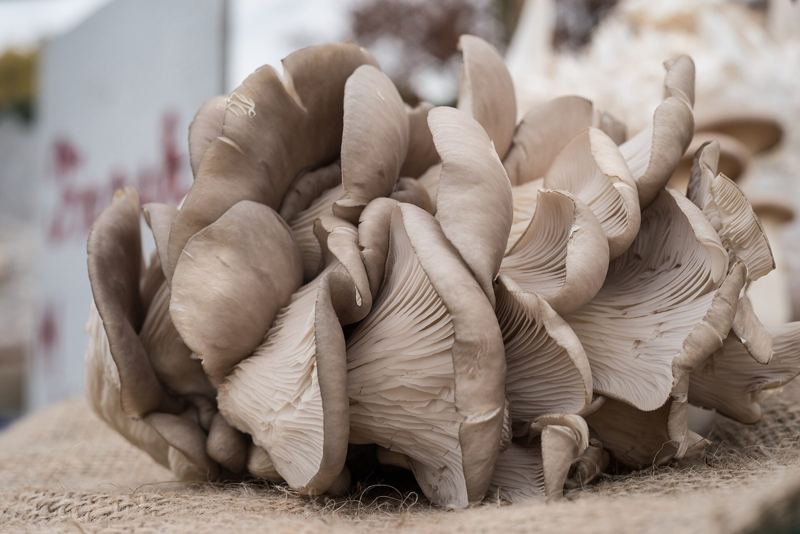 Oyster Mushroom
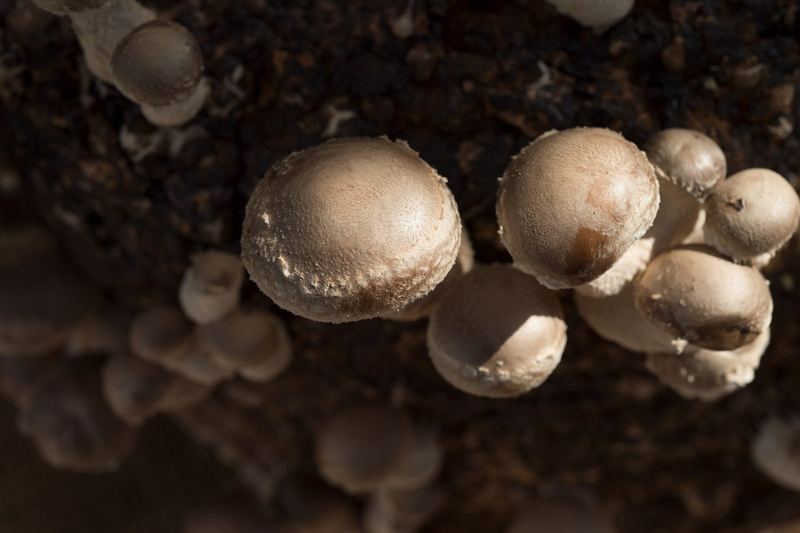 Shiitake
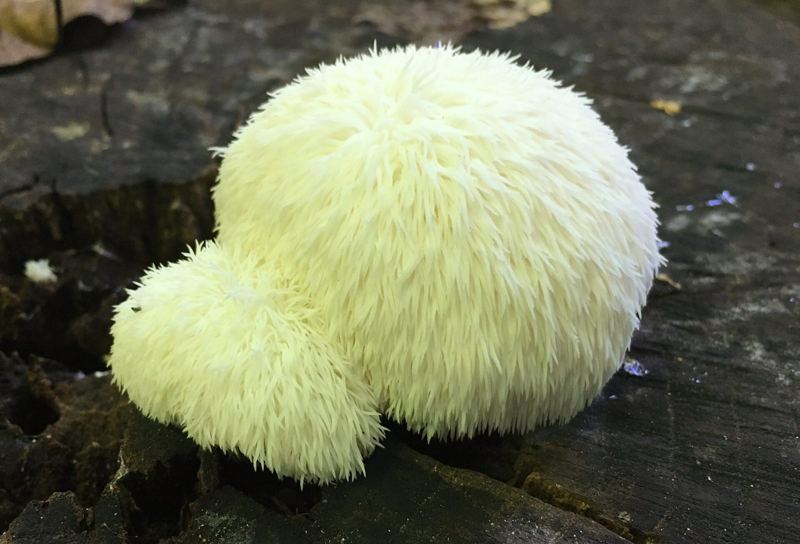 Lion's Mane