
You can grow oyster mushrooms indoors in a 5-gallon bucket of wood chips and grain spawn, or in bags of pasteurized straw. Both are home-scale methods from university extension services, and neither needs more than a corner of a room. The bucket route is the simpler of the two. For the bigger picture, including kits and every species-level condition, see our oyster mushroom growing guide.
The bucket method (University of Wisconsin)
Wisconsin Extension’s home method packs wood chips and grain spawn into a 5-gallon bucket. The steps our source gives:
- Pack the bucket. Fill a 5-gallon bucket with wood chips and grain spawn. Our source does not give a ratio or a way to prepare the chips, so follow the spawn supplier’s directions. Our spawn guide explains what grain spawn is.
- Find a spot and leave it alone. Choose a location that is about room temperature (65–75°F, or 18–24°C) and away from sunlight. Leave the bucket undisturbed there for about 14 days.
- Once pins show, add humidity. When pins start growing, remove the bag and spray the outside of the bucket with water to hold a high humidity.
- Keep misting and harvesting. Continue spraying and picking the mature mushrooms for the next four weeks, or until the bucket stops producing.
The bag method (University of Florida)
UF/IFAS builds its home guide around pasteurized wheat straw in bags, the same recipe our oyster guide walks through:
- Cut straw into 4–5 in (10–13 cm) pieces and soak it overnight.
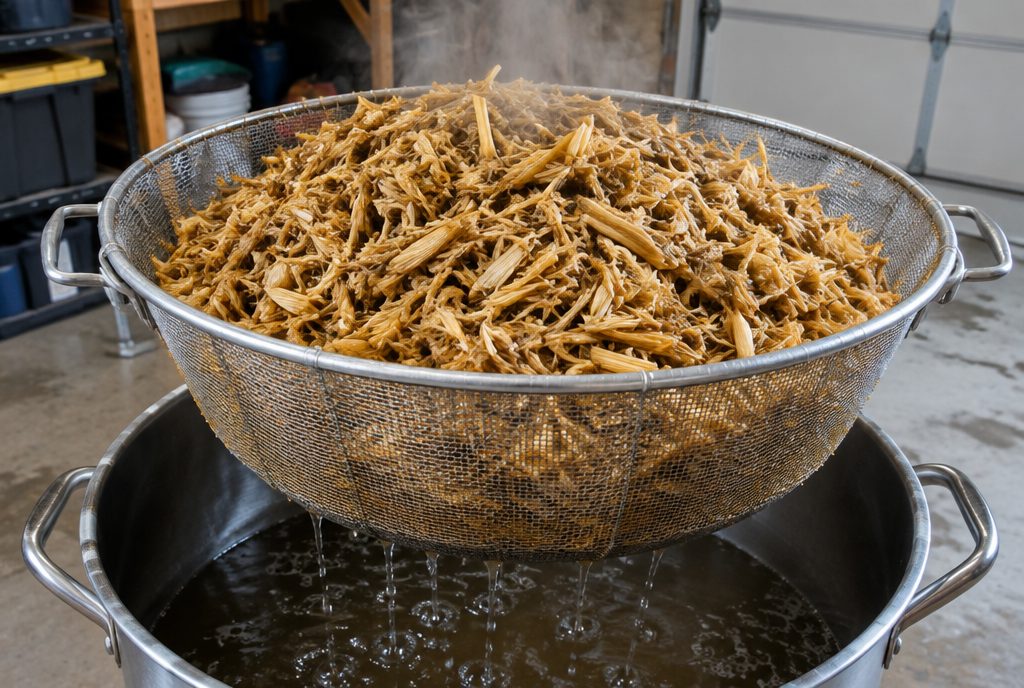
- Pasteurize it at 165°F (74°C) in a water bath for 1–2 hours.
- Mix in grain spawn at 5–10% by volume or weight, and fill bags.
- Incubate the filled bags in a clean, dark place, such as a cardboard box, at 24–25°C (75–77°F) and 80–90% humidity for two to three weeks.
- When the bags are ready, fruiting is triggered by light and a lower temperature of about 20°C (68°F). UF holds fruiting humidity at about 90% and stresses good air exchange to avoid CO2 build-up.
Our sources do not describe how to open the bags to let the mushrooms out, so use the instructions that come with your spawn. Cornell’s DIY substrate trials used a fruiting room at 85% humidity with fresh air regularly circulated in, which is a useful reality check for a small indoor setup.
Which container to choose
| Bucket (Wisconsin) | Bags (UF/IFAS) | |
|---|---|---|
| Substrate | Wood chips | Pasteurized wheat straw |
| Spawn | Grain spawn | Grain spawn, 5–10% |
| Incubation | About 14 days, 65–75°F | 2–3 weeks, 75–77°F, dark |
| Fruiting | Remove bag, mist the bucket | Light, about 68°F, about 90% humidity |
| Flushes | Harvest about 4 weeks | 2–4 more after the first |
The two methods use different substrates, so these are not interchangeable recipes. Cornell notes that the carbon source can be almost anything for a generalist like oyster, and UF lists rice stalks, corn cobs, coffee grounds, cotton pulp, peanut shells, banana and plantain leaves and paper as alternatives to straw. Our substrate guide covers the trade-offs.
Keeping indoor containers clean
Indoor containers still get contamination. UF says to examine bags for blue, green, black or yellow spots and to protect them from crawling and flying insects and from rodents. Trichoderma shows as rapid green growth. Heavily contaminated bags are best removed and discarded. Cornell adds that straw left outdoors gets insect larvae, which is a reason to keep your container indoors. See our mushroom contamination guide for how to tell one problem from another.
What our sources do not tell you
We found no source giving a wood chip to spawn ratio for the bucket, a hole pattern for bags, or a yield per bucket. Wisconsin gives the schedule but not the numbers inside the bucket. If you want a precise recipe, take it from your spawn supplier and use the schedule above to judge whether the batch is on track. When it is time to pick, our oyster harvesting guide covers timing, and if you would rather skip the setup entirely, a grow kit does the colonizing for you.
Frequently asked questions
How big a bucket do I need to grow oyster mushrooms?
Wisconsin's home method uses a 5-gallon bucket packed with wood chips and grain spawn.
How long before oyster mushrooms appear in a bucket?
Wisconsin says to leave the bucket undisturbed for about 14 days at room temperature, 65–75°F, away from sunlight. Pins should start after that, and you then keep misting and harvesting for about four weeks or until the bucket stops producing.
Can I use straw in a bucket instead of wood chips?
Wisconsin's bucket guide uses wood chips. UF/IFAS uses pasteurized straw in bags, not buckets. Our sources do not describe straw in a bucket, so we cannot give you ratios for it.
Do I have to pasteurize the substrate?
For the UF/IFAS straw method, yes: it holds the straw at 165°F (74°C) in a water bath for 1–2 hours before the spawn goes in.
Sources
- Growing Mushrooms in Buckets, University of Wisconsin Extension, Forestry and Wildlife
- D.I.Y. FunGuide: Grow Your Own Oyster Mushrooms at Home (SL448/SS662), University of Florida IFAS Extension
- The Science of DIY Mushroom Substrates, Cornell Small Farms