
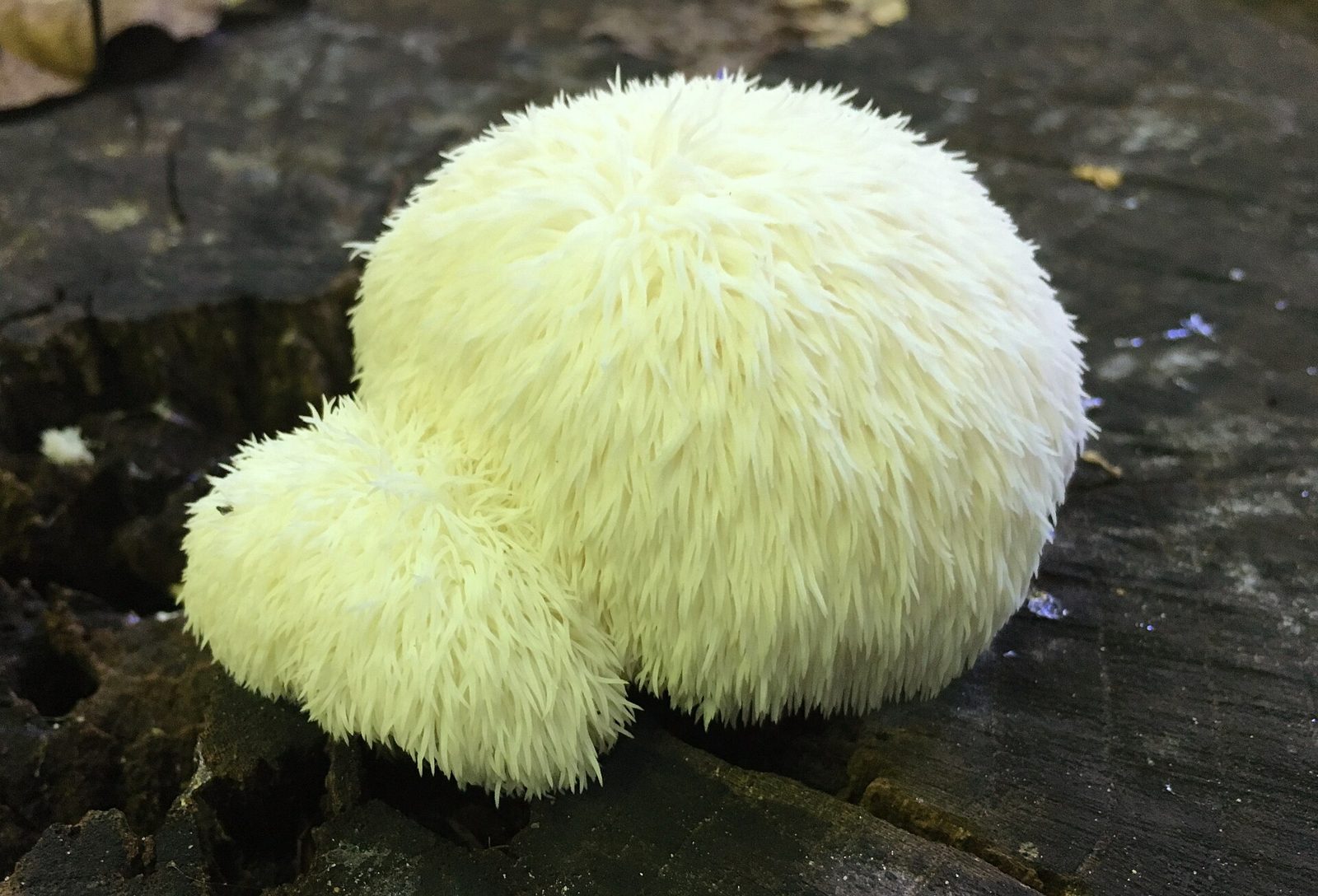
To grow lion’s mane mushrooms at home, fruit them indoors from hardwood sawdust, keep the air humid and fresh, and harvest while the spines are short. It is an indoor mushroom: Cornell says oyster, shiitake and lion’s mane are the species most commonly grown in indoor or controlled-environment production. The easiest way in is a lion’s mane grow kit, which arrives already colonized. This page covers building your own sawdust blocks, and it is honest about a gap: our extension sources give almost no lion’s mane temperatures or timings, so the numbers here come from one trial, and we say so each time.
- Container friendly
- Yes
- Substrate
- Hardwood sawdust (Cornell)
- Where
- Indoors, controlled environment
- Harvest sign
- Teeth about 1 cm (0.4 in), drooping
- Time to harvest
- 47 days in one Thai trial
- Fruiting temp
- 16°C (61°F) in that trial
- Fresh air
- Essential (Purdue, general)
Where the numbers on this page come from
Two kinds of source sit side by side here, and they are not equally strong.
Extension sources (Cornell, Purdue, the University of Kentucky) give practical guidance: the substrate, the need for humidity and fresh air, and the harvest sign. We state those normally.
One trial supplies the rest. A peer-reviewed study in Thailand grew lion’s mane (Hericium erinaceus) on rubber-tree sawdust in bottles and published its colonization temperature, fruiting temperature, humidity, lighting, days to harvest and yield. We found no extension text that gives any of those for lion’s mane, so we use the trial and label every figure “in the Thai trial”. It is one study on one substrate in one set-up. It is not a general rule for your kitchen or garage.
What lion’s mane grows on
Cornell says shiitake, lion’s mane and others do best on sawdust, and sawdust-based blocks are the usual route for growers. See our mushroom substrate guide for the basics.
The Thai trial tested two sawdusts. The best result came from 100% rubber-tree sawdust: a fresh yield of 113.22 g, a dry weight of 23.25 g and a biological efficiency of 42.61%. A 3:1 mix of rubber and bamboo sawdust gave a comparable yield, and yield fell as the share of bamboo went up. Read this mainly as evidence that sawdust works and that the substrate mix changes the result.
Lion’s mane is also one of the species in Cornell’s log-cultivation research, and the University of Kentucky describes log inoculation with dowel or sawdust spawn. Neither gives lion’s mane log timings, so we treat blocks and kits as the main route. For logs in general, see our guide to growing mushrooms on logs.
Lion’s mane growing conditions
The table separates the trial’s numbers from the extension guidance, so you can see which is which.
| Stage | Days | Temperature | Humidity | Light | Fresh air | Notes |
|---|---|---|---|---|---|---|
| Colonization (Thai trial) | 7 days | 68°F (20°C) | Not stated | Light present | Not stated | Bottles were incubated at 20°C in light, then moved to the fruiting room after 7 days. That is when the trial moved them, not a full colonization time. |
| Fruiting (Thai trial) | Not stated | 61°F (16°C) | 65–75% | 8 hours a day | Not stated | 16°C in a cropping room. The same paper's background sentence says 18–24°C (64–75°F), which conflicts. |
| Pinning and fruiting (Purdue) | Not stated | Not stated | 90% | Not stated | Fresh air exchange is a must | Purdue says to raise humidity to 90% when pins begin, but avoid water trapped between the spines. General gourmet guidance. |
| Harvest | 47 days | Not stated | Not stated | Not stated | Not stated | 47 days after spawning in the Thai trial. Cornell: harvest when the teeth are about 1 cm (0.4 in) long and drooping. |
The two humidity figures disagree: the trial used 65–75% in its fruiting room, while Purdue’s general advice is 90% once pinning begins. We cannot tell you which is better for lion’s mane. If you grow from a kit, follow the maker’s humidity advice, and watch the mushrooms rather than the number (see Problems below).
How to grow lion’s mane on sawdust
- Choose a hardwood sawdust substrate. Cornell says sawdust suits lion’s mane best. Our sources do not give a supplement or moisture recipe for it, so use the mix your spawn supplier recommends.
- Prepare and spawn the substrate. Our sources give no sterilizing or pasteurizing method for lion’s mane. In the Thai trial each bottle was inoculated with spawn of 30 sorghum grains, which is grain spawn, but no rate per amount of substrate is given. Our spawn guide explains the types.
- Let it colonize. In the Thai trial the bottles sat at 20°C (68°F) with light for 7 days before moving to fruiting conditions. A full colonization period is not stated, so wait until the block is firmly white, or follow your supplier’s timing.
- Move to fruiting conditions. The trial used 16°C (61°F), 65–75% relative humidity and 8 hours of light a day. Purdue says fresh air exchanges are a must.
- Keep humidity up without soaking the spines. Purdue says lion’s mane needs high humidity at certain stages, but water trapped between its spines can distort the mushroom. Aim moisture at the air around the block rather than directly onto the mushroom.
- Harvest at the right moment. Cornell says to harvest when the teeth are about 1 cm (0.4 in) long and drooping downward. See harvesting lion’s mane.
Lion’s mane care
Humidity
Fresh air
Light
Temperature
Common lion’s mane problems
We found no extension text on lion’s mane contaminants or pests, so we list none rather than guess. General contamination signs are in our contamination guide.
Harvesting lion’s mane
Cornell says lion’s mane should be harvested when the teeth are about 1 cm (0.4 in) long and drooping downward. The Thai trial harvested at 47 days after spawning, though that number is only a reference point. Cornell notes that lion’s mane has a shorter shelf life than shiitake, so plan to use it soon after picking. Our lion’s mane harvesting guide covers the signs and storage.
What our sources do not tell you
We found no extension source for lion’s mane colonization time, fruiting temperature, lighting or days to harvest, which is why those come from one trial. We also found nothing on lion’s mane varieties, contaminants or pests, a substrate moisture recipe, or a spawn rate per amount of substrate. The Thai trial also conflicts with itself on fruiting temperature (16°C versus 18–24°C). Where sources differ, we show both.
Grow these next
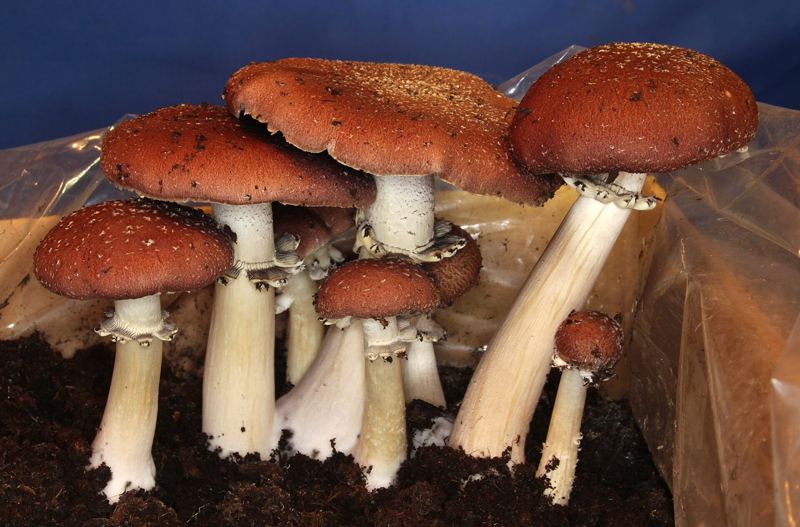
If you want a faster first success, oyster mushrooms fruit quickly and forgive mistakes, and shiitake adds a log-based option. For something outdoors, wine cap grows in a garden bed from purchased spawn. Start with the basics in our how to grow mushrooms guide and the grow kits guide.
Frequently asked questions
What do lion's mane mushrooms grow on?
Hardwood sawdust is the usual substrate. Cornell says shiitake, lion's mane and others do best on sawdust. Purdue's general gourmet guide lists wood, paper, grains, coffee waste and straw as options for gourmet mushrooms overall, but that list is not specific to lion's mane.
How long does lion's mane take to grow?
No extension source we found gives a timeline. In one university trial in Thailand, on rubber-tree sawdust in bottles, mushrooms were harvested 47 days after spawning. That is one study's result, not a rule, and a kit that arrives already colonized will be faster.
What temperature does lion's mane fruit at?
The only figure we have is from that Thai trial, which fruited bottles at 16°C (61°F). The same paper's background sentence says 18–24°C (64–75°F), so the two numbers do not agree. Treat both as starting points and follow your spawn or kit supplier's instructions.
Can I grow lion's mane in a kit?
Yes. A kit is a block that is already colonized, so you only manage the fruiting conditions. See our guide to growing lion's mane from a kit.
When do I harvest lion's mane?
Cornell says to harvest when the teeth (the hanging spines) are about 1 cm (0.4 in) long and drooping downward.
Sources
- Harvest to Market: Specialty Mushroom Production, Cornell Small Farms
- Growing Gourmet Mushrooms, Purdue Extension
- Gourmet and Medicinal Mushrooms (CCD-CP-079), University of Kentucky Center for Crop Diversification
- Seven Stages of Cultivation, Cornell Small Farms
- Cultivation of Hericium erinaceus (Yamabushitake) on rubber and bamboo sawdust, Peer-reviewed trial in Thailand (PMC10432537)
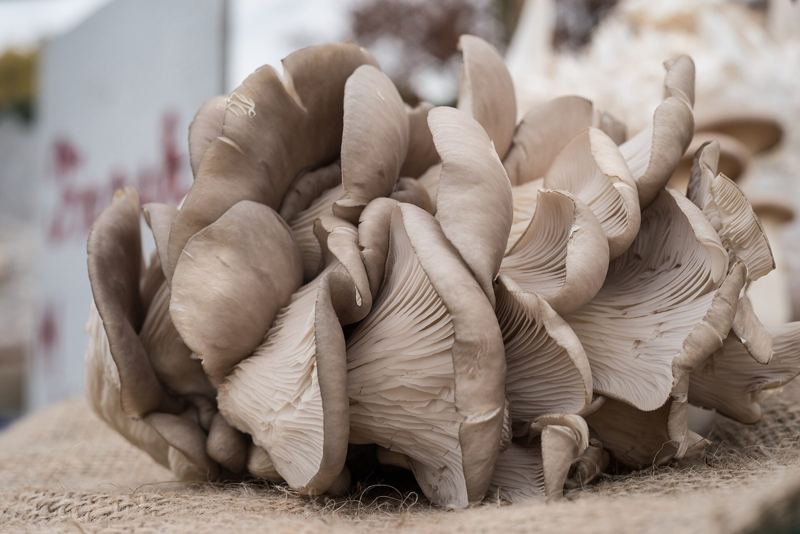 Oyster Mushroom
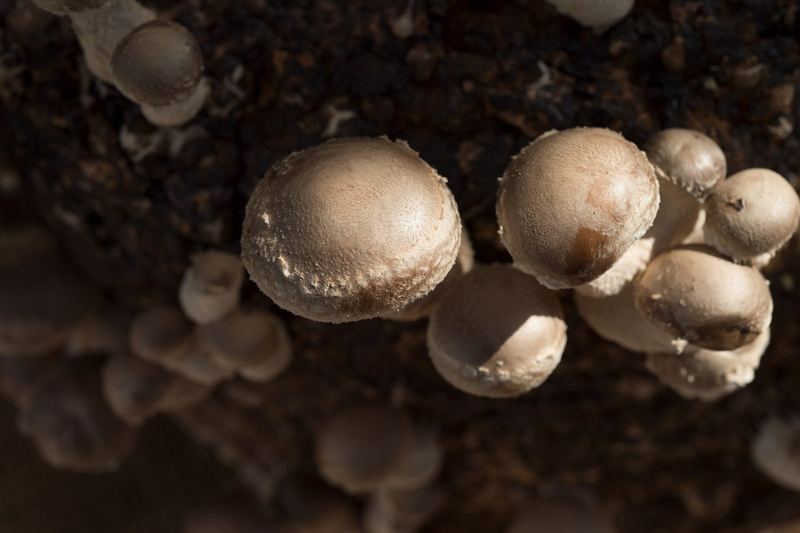 Shiitake
 Wine Cap